Best Crested Gecko Food: Pangea vs Repashy and More
Heads up: Terrarium Tested is reader-supported, and we may earn a commission if you buy through links on this page, at no extra cost to you. As an Amazon Associate I earn from qualifying purchases. Read our affiliate disclosure.
Finding the best crested gecko food is easier than it used to be. Twenty years ago keepers were mixing baby food and guessing. Today there are complete powdered diets (often called CGD or MRP) that you mix with water, and most crested geckos can live their whole lives on them, with insects as a bonus. The trick is picking a brand your gecko will actually eat, and rotating flavors so they don’t get bored.
How we picked: these are researched picks based on the manufacturers’ published ingredients and feeding directions, current crested gecko care guidance, and which diets experienced keepers and breeders most often use. We haven’t run feeding trials ourselves, and we don’t make claims about weight gain or health results.
What crested geckos eat
In the wild, crested geckos (Correlophus ciliatus) from New Caledonia eat fruit, nectar, pollen and insects. In captivity, a complete commercial diet covers the fruit and nectar side, and gut-loaded insects like crickets or dubia roaches cover the protein side. ReptiFiles’ schedule is crested gecko diet (CGD) daily for juveniles up to 12 months, plus insects once or twice a week. Adults get CGD every 2-3 days and insects up to once a week.
Avoid feeding fruit alone or homemade mixes as a staple. They rarely have the right calcium-to-phosphorus balance, and that’s a fast road to metabolic bone disease.
What to look for in a crested gecko diet
- Complete nutrition: the label should say it’s a complete diet, not a treat.
- Added calcium and D3: already balanced, so you don’t need to dust it.
- Insect or animal protein: many modern diets include insect meal, which crested geckos seem to like.
- Flavor variety: rotating 2-3 flavors helps with picky eaters.
- Easy mixing: most mix at roughly 1 part powder to 2 parts water, but follow the label.
Researched picks
Pangea Fruit Mix Complete
Pangea is one of the most widely used crested gecko diets in the US. It comes in many flavors, including versions with insects (like the “With Insects” line) and fruit blends like Watermelon, Fig and Apricot. A lot of keepers find their geckos take to Pangea readily, which makes it a strong first pick.
Repashy Crested Gecko MRP (Classic)
Repashy‘s Crested Gecko MRP is the diet that helped make powdered feeding standard. It’s been around a long time, is easy to find, and many breeders still use it. Repashy also makes Grubs ‘N’ Fruit, which some keepers rotate in for extra insect protein.
Leapin’ Leachie
Leapin’ Leachie is a separate brand made for New Caledonian geckos. It’s higher in protein and popular with breeders. It’s useful in a rotation, especially if your gecko gets bored of one taste.
Black Panther Zoological
Black Panther Zoological makes a crested gecko diet with a strong insect focus. Some keepers use it for geckos that ignore fruitier formulas.
Lugarti, Arcadia, Blue River Diets and Zoo Med (new formula)
ReptiFiles’ approved list also includes Lugarti, Arcadia, Blue River Diets and Zoo Med, but for Zoo Med only the new formula. It says generic diets from brands like National Geographic and Exo Terra “should be left on the shelf.” Arcadia’s crested gecko diet can be harder to find in the US.
Pangea vs Repashy: which should you start with?
Honestly, both are good. Pangea has more flavor choices and a lot of fans among picky-eater owners. Repashy has the longest track record. If you can, buy a small bag of one Pangea flavor and Repashy Classic, offer each for a week, and see which one your gecko licks clean. Then keep both in rotation.
How to prepare and serve it
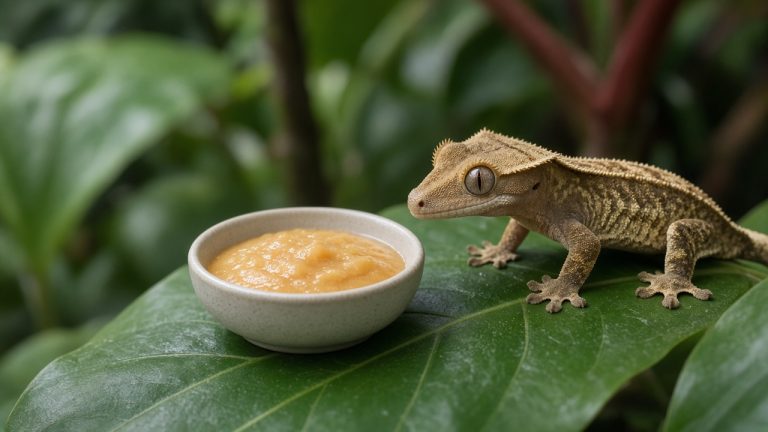
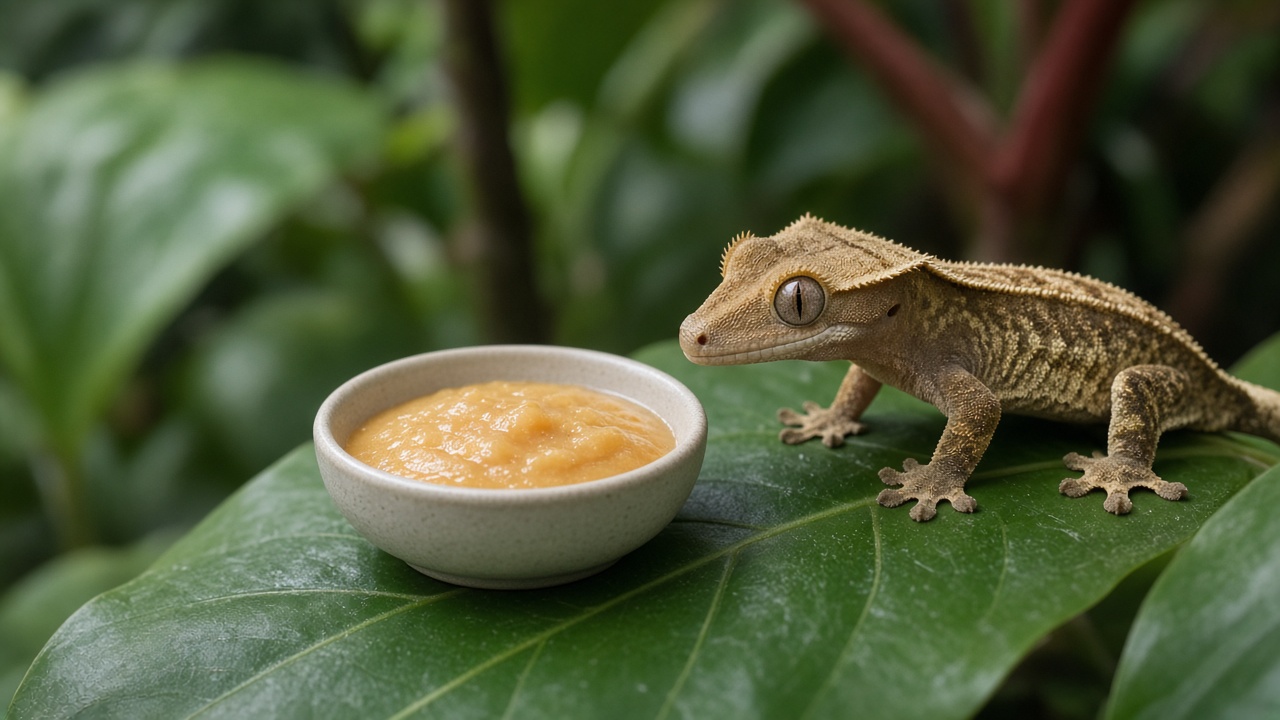
- Mix the powder with water at the ratio on the bag until it’s about the texture of ketchup.
- Serve in a small dish on a ledge or feeding station near the top of the enclosure. Crested geckos are arboreal and prefer to eat up high.
- Remove leftovers after 24-36 hours, before they spoil or go moldy.
- Store the dry powder sealed in a cool, dark place. Some keepers freeze bulk bags to keep them fresh.
Help for picky eaters
A gecko that ignores its food is usually stressed, too cold, newly moved, or just not into that flavor. Try these in order:
- Check temperatures. ReptiFiles recommends a basking area of 82-85°F at the top of the enclosure and 70-75°F lower down. If the whole enclosure sits at or below about 72°F all the time, poor appetite is common.
- Give a new gecko a week or two to settle before worrying.
- Switch to a different flavor or brand.
- Offer a few appropriately sized insects to kick-start interest.
- Weigh your gecko on a gram scale weekly. If weight keeps dropping, see an exotics vet.
Insects for crested geckos
Insects aren’t strictly required with a complete diet, but many keepers add them for enrichment and protein. Good options include crickets, dubia and discoid roaches, black soldier fly larvae, silkworms and captive-bred hornworms (never wild ones, which are toxic). ReptiFiles says to avoid mealworms and superworms for cresties because they can be hard to digest. Waxworms are fine as an occasional treat. Size them no larger than the space between your gecko’s eyes, gut-load them for a day before feeding, and dust with calcium: without D3 if you run UVB, with D3 if you don’t. If you are still choosing a home, see our crested gecko enclosure guide. Our bioactive vivarium guide also covers how to keep escaped feeders from becoming a problem.
Feeding schedule by age
| Age | Powdered diet | Insects |
|---|---|---|
| Juvenile (0-12 months) | Fresh dish daily | 1-2 times a week, small |
| Adult (12+ months) | Every 2-3 days | 0-1 times a week |
This schedule is from ReptiFiles’ current care guide. Watch your gecko’s body condition and adjust.
Picky eaters and weight gain: what actually helps
Autocomplete is full of searches like “best crested gecko food for picky eaters” and “best food to gain weight.” The honest answer is that there’s no magic formula. Picky eating is usually about the environment or the flavor, not the brand. A gecko that’s underweight needs its temperatures checked, a quiet enclosure, and a diet it reliably eats, which is why rotating two or three complete diets works better than chasing a single “weight gain” product.
A few practical tricks keepers use: serve food fresh in the evening when cresties wake up, put the dish high up where the gecko already hangs out, and try a thinner mix for juveniles. If you’ve done all that and your gecko keeps losing grams week after week, it’s vet time, not brand-switching time. Parasites and other health issues can look like pickiness.
How much powder to buy
An adult crested gecko eats surprisingly little. Small bags last a while for one gecko, so buy small packs of several flavors at first rather than one giant bag. Once you know what your gecko likes, buying bigger makes sense.
FAQ
Can crested geckos live on powdered diet alone?
They can survive on it, especially diets that already contain insects, such as Pangea With Insects or Repashy Grubs ‘N’ Fruit. ReptiFiles still recommends insects about once a week for exercise, enrichment and growth.
How long can mixed crested gecko food sit out?
About 24-36 hours. After that, throw it out and serve fresh.
Is fruit baby food OK for crested geckos?
Not as a staple. It lacks the right nutrients and calcium balance.
Why won’t my crested gecko eat?
Common causes are stress after a move, low temperatures, or flavor preference. If weight drops steadily, see a vet.
Do I need to dust crested gecko food with calcium?
No. Complete diets already include calcium and D3. Dust insects instead.