Best Leopard Gecko Enclosure: Size, Glass vs PVC and Picks
Heads up: Terrarium Tested is reader-supported, and we may earn a commission if you buy through links on this page, at no extra cost to you. As an Amazon Associate I earn from qualifying purchases. Read our affiliate disclosure.
Picking the best leopard gecko enclosure sounds easy until you start reading. Some sources say a 10-gallon is fine. Others say nothing under 4x2x2. Then there’s glass versus PVC, front-opening versus top-opening, and a pile of “starter kits” that cut corners. Let’s sort it out so you can buy once and be done.
How we picked: these are researched picks based on current published husbandry guidance (such as ReptiFiles and other keeper-led care sources), manufacturer dimensions and features, and what experienced keepers commonly recommend. We have not personally tested these enclosures.
How big should a leopard gecko enclosure be?
The 10-gallon “starter tank” is outdated. The commonly cited minimum for one adult leopard gecko today is 36″ x 18″ x 18″ (the footprint of a 40-gallon breeder). Many care guides recommend going up to 48″ x 24″ x 24″ (often called a 4x2x2 or a 120-gallon footprint) if you have the space.
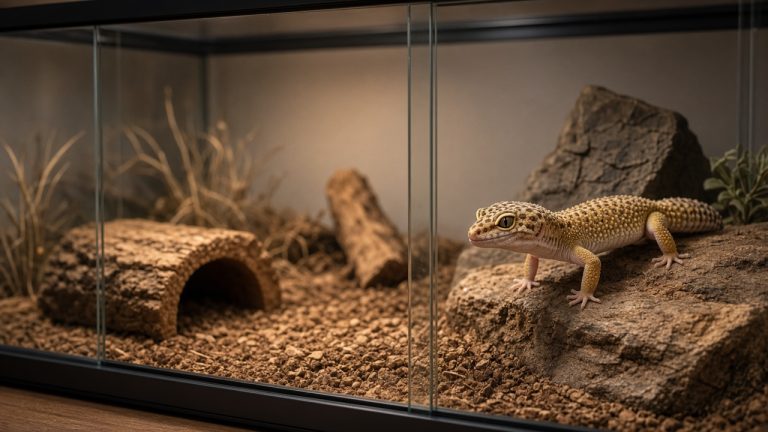
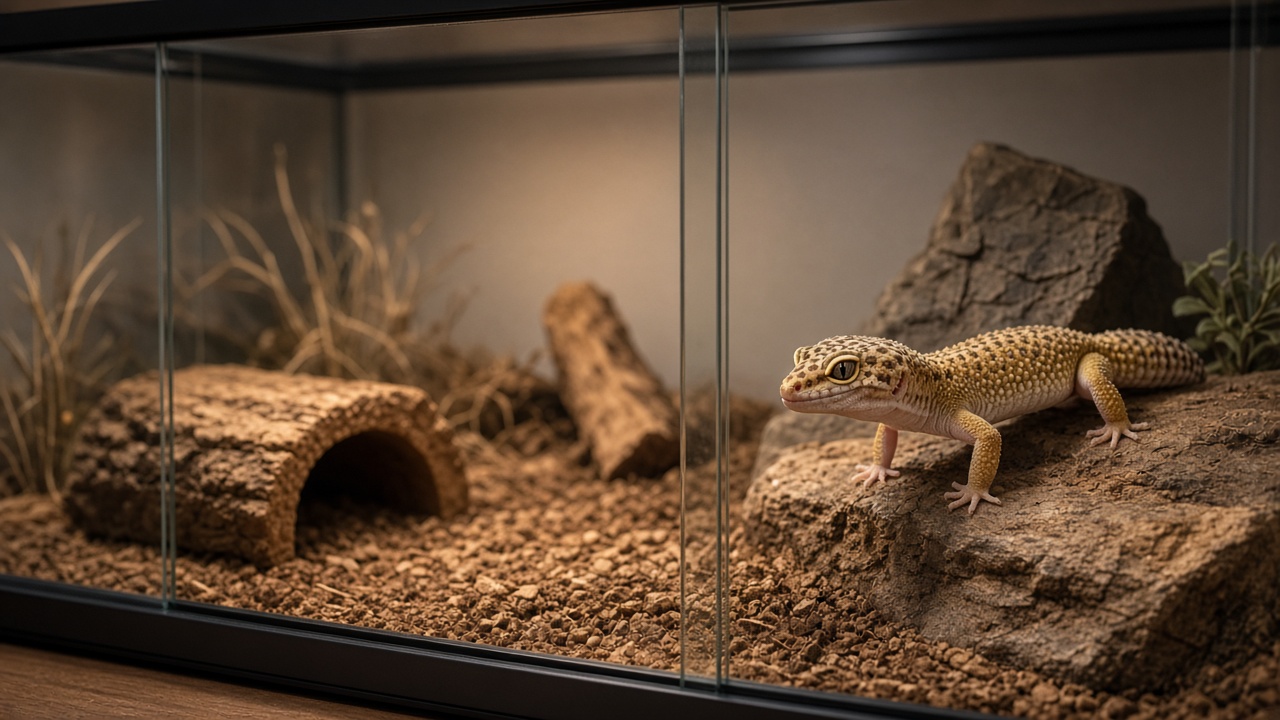
Why the push for bigger? A longer enclosure gives you a real temperature gradient: a warm basking zone at one end and a properly cool zone at the other. It also leaves room for multiple hides, climbing clutter and a humid hide, which leos use a lot more than people expect.
Floor space matters more than height for leopard geckos, but 18-24″ of height lets you add rocks and branches. Leos do climb, they’re just clumsy about it, so keep any climbing low and secure.
Glass vs PVC vs wood
Glass
Front-opening glass terrariums from Exo Terra and Zoo Med are easy to find and easy to see into. Glass loses heat faster than PVC, but its screen top keeps a leo setup nicely dry, and many keepers find glass makes a varied gradient easy to build. A 40-gallon breeder with a front-opening conversion is a budget path that still meets the minimum.
PVC
PVC holds heat well, is light, and usually opens from the front. For most leopard gecko keepers who want a 4x2x2, it’s the best balance. Our PVC enclosure guide covers brands in detail.
Wood or melamine
Wooden vivariums are common in the UK and hold heat well, but they need sealing and don’t love humidity. For a dry-ish leo setup they can work fine if properly sealed.
Features that matter
- Front access: reaching in from above stresses many geckos.
- Room for UVB and a heat lamp: leopard geckos benefit from low-level UVB plus overhead heat. See our UVB guide.
- Secure lid or top: leos are escape artists when they want to be.
- Ventilation: they prefer lower ambient humidity, so decent airflow helps.
- Substrate lip: useful if you want a soil-sand mix several inches deep for digging.
Researched picks
Best overall: a 4x2x2 PVC enclosure
Brands like Zen Habitats, Custom Reptile Habitats and Animal Plastics make 4x2x2 PVC units that give a leopard gecko plenty of room and hold a stable gradient. If you can fit it, this is the one most care guides would point you to.
Best glass option: Exo Terra front-opening terrarium (36″ x 18″ x 18″)
Exo Terra‘s large front-opening glass terrarium hits the common minimum footprint, has dual front doors, and is sold almost everywhere. Add some background or cover the sides to make your gecko feel secure.
Best budget path: 40-gallon breeder with front-opening conversion
A standard 40-gallon breeder tank plus a front-opening kit or a secure screen lid keeps costs down while meeting the minimum. It’s not fancy, but it works.
Avoid: 10- and 20-gallon “starter kits”
They’re too small for an adult and often come with heat rocks or calcium sand. We explain why in our setup checklist.
Setting up the inside
A good layout has at least three hides: a warm hide, a cool hide and a humid hide lined with moistened substrate (ReptiFiles advises against sphagnum moss and shredded paper towel here, because geckos can swallow them). Put a heat source on one side, aim for a basking surface around 94-97°F, and keep the warm hide around 90-92°F and let the cool side sit at 70-77°F. Our temperature and humidity guide covers exact numbers. Add a shallow water dish, a calcium dish if you like, and plenty of clutter so the gecko can cross the enclosure without feeling exposed.
Common enclosure mistakes we see
Heat rocks. They’re still sold in some kits, and they can cause burns because the gecko presses its belly against a surface it can’t regulate. Use overhead heat or a heat mat on a thermostat instead.
Calcium sand. It’s marketed as “digestible,” but many keepers avoid it because geckos may eat it on purpose for the calcium. If you want a loose substrate, ReptiFiles’ DIY semi-arid mix is 60% organic topsoil, 30% washed play sand and 10% excavator or bentonite clay by volume, packed at least 4″ deep and fully dried before the gecko goes in. Paper towel or tile is fine too, especially for quarantine.
Bare, open floors. An empty enclosure with two hides at either end looks tidy but it makes geckos feel exposed. Fill the middle with cork bark, rocks, fake or dry-tolerant plants and branches so there’s always cover.
No thermostat. Every heat source needs a controller. A heat mat or lamp running flat out can reach dangerous temperatures. See our thermostat guide.
Where to put the enclosure in your home
Pick a spot away from windows, heating vents and AC outlets. Direct sun through glass can cook an enclosure in minutes, and drafts make your gradient swing all day. A quiet interior wall works best. Keep it off the floor if you have dogs or cats; a sturdy stand or dresser at waist height also makes maintenance much easier on your back.
Leopard geckos are crepuscular, meaning they’re most active at dusk and dawn. Put them somewhere you’ll actually see them in the evening, and you’ll enjoy them a lot more.
Upgrading from a small tank
If your gecko is already in a 20-gallon, don’t panic. Move everything over to the bigger enclosure, keep the same hides so it smells familiar, and expect a few days of hiding. Most leos settle in within a week and start exploring the extra space at night. Hold off on handling during that first week.
Glass tank conversions: worth it?
If you already own a 40-gallon breeder, you don’t have to toss it. Front-opening conversion kits and secure screen lids can turn a standard tank into a decent leo home. Cover three sides with a background or even dark contact paper on the outside so your gecko isn’t exposed from every angle. Put the heat lamp on top of a screen lid at one end, the UVB next to it, and you’ve got a workable setup that meets the minimum footprint.
Enclosures ReptiFiles names
If you want a shortcut, ReptiFiles lists specific commercial enclosures by tier. At the minimum level, it lists the Repti Zoo Easy Folding 50 Gallon. One step up are the Kages 36″ x 24″ x 18″ and the Toad Ranch BC36. Its “best” tier is any 4’x2’x2′, such as the Kages, Zen Habitats or Toad Ranch BC48 models. We’ve checked that these brands still sell those sizes. We haven’t tested them ourselves.
FAQ
Is a 20-gallon tank OK for a leopard gecko?
It’s fine as a temporary home for a hatchling, but it’s below the commonly cited adult minimum of 36″ x 18″ x 18″.
Do leopard geckos need a tall enclosure?
Not tall like crested geckos, but 18-24″ of height gives room for low climbing and overhead heating.
Is PVC or glass better for leopard geckos?
Both work. PVC holds heat better and feels more secure; glass is cheaper and easier to find.
Can two leopard geckos share one enclosure?
Generally it’s not recommended. Males fight, and even females can stress each other. One gecko per enclosure is the safe default.